Sunday, 27 September 2015

Glasses


 Photo: Sam Hare

Bear with me. This isn't strictly about Curious Incident; but, to paraphrase Apocalypse Now, it is impossible to tell my story without telling this one too.

I got new glasses towards the end of 2010. I was working for the National Theatre, and for Marianne Elliott, for the first time. I wore them as often as I was meant to - constantly - for five years.

For me, these glasses have sort of punctuated this tour. Early this year, while we were in Hull, a friend sent me an article which pointed out that my over-dramatic use of them in a key scene in Broadchurch was, frankly, a bit over the top.


Which was fair enough. I don't wear them on stage unless the part demands it; which isn't very often. So I leave them in my dressing room. Sometimes, people like Joshua Jenkins like to go in when I'm not there and put them on and take silly photographs.


In August, I left them on a train on the way to Sunderland. Due to remote venue scheduling, I was without them for four weeks. All I had, for a month, was my prescription sunglasses. I tried to explain to people that honestly, I wasn't trying to affect the backstage persona of some third-rate Jack Nicholson: it was simply the only way that I could see properly. Three days after I got them back, I broke them in Norwich whilst trying to prevent them from falling on the floor. They were glued. And again. And again.

Today - well: yesterday, now - on the way to work, my car suddenly caught fire in Sheffield. It was a terrifying few minutes in which I was convinced that someone would die: me, or any number of passers-by, or the astonishingly brave man who attempted to tackle my blazing car with a small fire extinguisher.

Anyway. I salvaged a few things from the charred carcass. I take a perverse kind of pleasure in that (a) these glasses survived, and we shall definitely now part company; and that (b) despite everything, the glue held.


It's a bit pre-emptive, with 8 weeks left, to be speaking of the end of a chapter. But that's what it feels like.


Tuesday, 15 September 2015

Sheffield


We're at the Sheffield Lyceum for two weeks. It amazes me, after all this time, that there are still audiences left to see this show. When you consider that this is our fifth visit to Yorkshire this year, or how near we are to towns that we've already been to - Nottingham, Stoke, Bradford, Leeds, York - it's astonishing (and quite exciting) that we're selling here as well as we are.

The last time I worked in Sheffield was in 1998, in Michael Grandage's wonderful production of Twelfth Night, with Malcolm Sinclair as Malvolio, Una Stubbs as Maria and Daniel Flynn as Orsino. We played for about a month in the Crucible, next door; and rehearsed in this room in the Lyceum.


For 17 years, I've always spoken about that show as the production I'm most proud to have been involved in. By the end of this year, I've a feeling that, from now on, I might be speaking of another play.

Tuesday, 8 September 2015

Norwich


I spent more of my childhood summers in East Anglia than anywhere else; so I'm particularly happy that this week we're playing a sell-out week at the Theatre Royal, Norwich. This is the only venue that we play in the region - no Ipswich, Cambridge, King's Lynn, Peterborough or Colchester.

We're not quite in the home stretch - it still takes two hands to count the remaining venues (just) - but we're getting there. After Aberdeen, it's nice to be a bit closer to home. Plus, I have fond memories of coming to visit my brothers - some twenty years ago - when they both studied at Norwich School of Art. My brother Sam, when he's not juggling various other things, writes songs. Some of them get their inspiration from East Anglia.


Wednesday, 2 September 2015

Aberdeen


We're in Aberdeen this week: for me, over 500 miles from home and the furthest north I have ever been in the world. Autumn has arrived very suddenly. I'm wearing a jumper, wishing I'd packed my hat and not profusely sweating in a theatre for the first time in months.

The show's in its autumn years, too: we're now into the last quarter of the tour. I've only done one year-long tour before; and I distinctly remember that, after about 250 shows, things can get a little weird.

When you say and do the same things 8 times a week for a year, after a while you start to hear yourself, which is sort of terrifying. You'll hear a line - one of your own, or someone else's - and think to yourself "Is that what normally happens? I'm sure I haven't heard that before". Then you're immediately in trouble. If you're thinking that, you're not doing what you're meant to be doing: focusing on the next line; acting. Suddenly things can fall apart. The most familiar experience in the world suddenly becomes brand new: daunting, overwhelming, out of your control.

These are little moments, but they do come. Thankfully, they can leave as soon as they arrive. Tonight, watching some of the other actors do their stuff, I remembered the joy and the love I have for this play. It came after a rare matinee-less Wednesday: a rejuvenating day in the Caingorms; driving through the towns and villages on the River Dee, an hour or so west of Aberdeen; the purple hills of the eastern Highlands. In the words of George Harrison, daylight is good at arriving at the right time.


Tuesday, 25 August 2015

North


Curious Incident is about lots of things. Childhood, parenthood, love, perception. One of the phrases that gets the most use is "see your world differently". There's nothing like a long national tour to help you see your own country a little differently. Leeds, where we are this week, is a city in the North; right? Well, yes. Except that we travelled over 200 miles south to get to it. I remember feeling acutely, back in February, that anyone who thinks that Stoke-on-Trent is even faintly northern should try driving there from Newcastle upon Tyne, as I did. It took four hours. We stopped halfway, for lunch, in Wakefield.

There are a couple of points here. One is that, when you do this much travelling, you start to feel immune to distance (particularly if you fly or don't stare out of the train window; actually, as long as someone else is driving). In my experience, long distance travel is like long distance running: the key to getting through it is denial - a deliberate wool-pulling over the brain that prevents you from considering just how much distance lies ahead. No marathon runner in their right mind would say to themselves "1 mile down, 25 to go". That way madness lies. You look at the next mile, the next bend of the road, the next train stop. The end of the journey comes later (this may even have something to do with progress and lack of awe: something I touched on last week).

The other point is that this business is very London-centric. Time and time again, people ask me if this tour is coming anywhere near "town". Occasionally I rather facetiously respond that, yes, it's going to over thirty different towns. Just not London Town, which is of course what they assume the word means to everybody.

So, yes. If you live in London, Leeds is The North. Stoke's getting there. But, as they told us on the first day of rehearsal, this tour is about the National Theatre doing what it should be doing: being national. London theatregoers may think that this play reached its maximum interest and influence 2-3 years ago. I could show you around 10,000 people in each town we visit who would beg to differ.

Next week we'll be in Aberdeen. I knew that that's the furthest north I've ever been in the UK; but, looking at a map, it appears to be the furthest north that I will ever have been in the world. Hopefully I can think of something to say about it.

Thursday, 20 August 2015

Kubrick


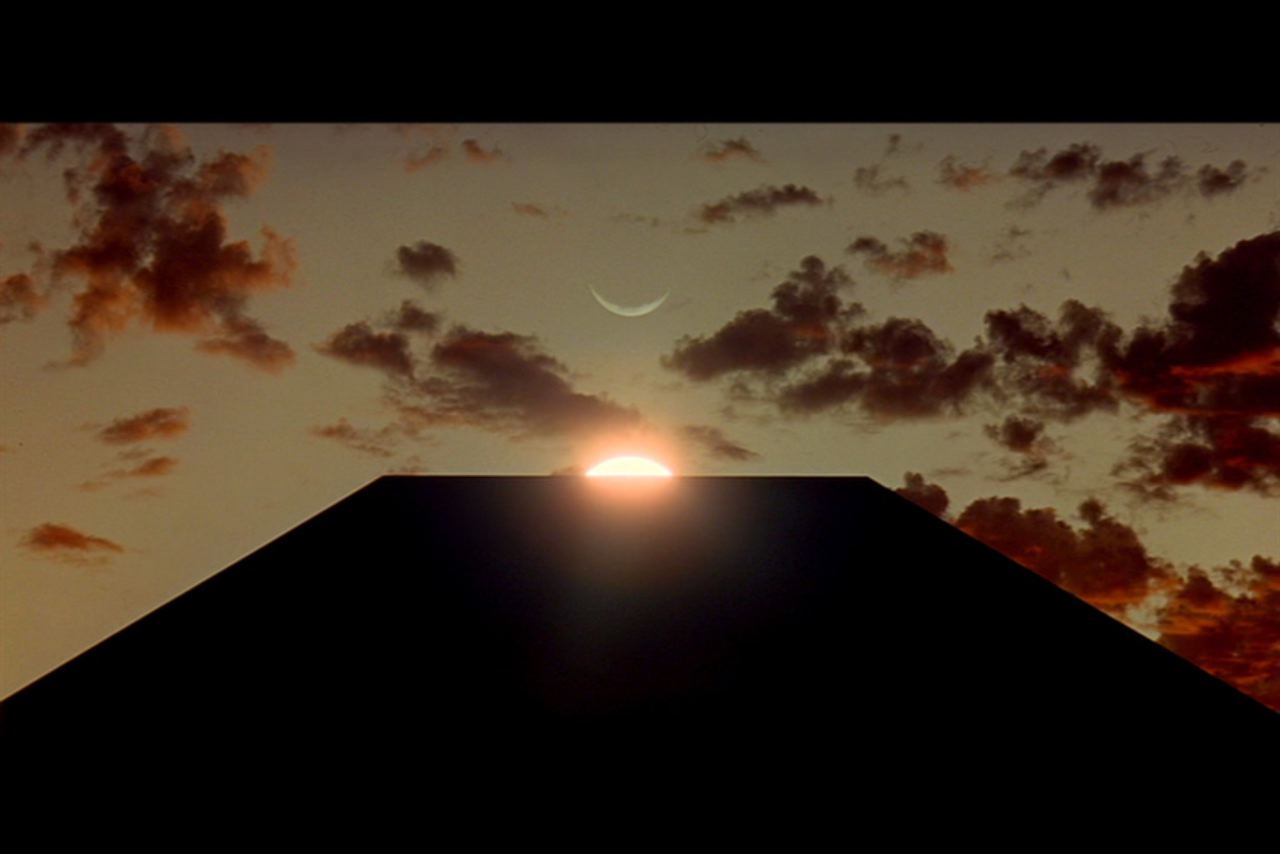
Back in December 2014, when we did our week-long technical rehearsal for Curious Incident, I got to see some of the play's special effects for the first time. Undoubtedly one of the most impressive was the scene where Christopher imagines he's flying through space, held aloft by a few of us, guided by Frantic Assembly: the sequence that is referred to in the company as 'Astroboy'. As I saw gigantic planets and galaxies projected on to the walls, the first thought I had was that it reminded me of Stanley Kubrick's 1968 film 2001: A Space Odyssey. Also, I happened to see the film again, in a new print, at the cinema just a day or so later. It had never occurred to me up until that point, but I started to see parallels between Christopher Boone and Stanley Kubrick. Initially, I thought this was because I was a little overloaded and saturated with the play that I was working on. You probably have to be that close to it to see an image like this and be reminded of your day job:


But then I started to give it a bit more thought. Kubrick, particularly in his later films, was nothing if not methodical. There's an almost mathematical precision - detractors would say a lack of emotion, a coldness - to his final six films, which span just over thirty years. Time and time again, his compositions show order, symmetry, balance: often perceived from a single, central perspective.


It reminds me of many of the stage compositions featured in this play: deliberately placed to reflect the order of Christopher's mind. Characters often enter the stage dead centre. As with many shots in Kubrick's films, you could draw a line through most scenes and see that the stage, and the characters on it, are almost perfectly symmetrical.


These are visual, stylistic elements; but, in both cases, it strikes me that that is how Christopher and Kubrick like it. Kubrick had a reputation for sometimes working better with machines than he did with actors. He doesn't strike me as a man who let emotion get in the way of his vision.

Earlier this year, I stumbled across the theory that Kubrick may have been on the autistic spectrum: perhaps even posthumously diagnosed with Asperger's Syndrome. Observers pointed to his relatively poor social skills, inflexibility and alleged obsessive nature.

The most interesting thing for me about 2001: A Space Odyssey, particularly with regard to Christopher Boone, is its lack of emotion. In a world of space travel, unseen alien forces and effortless contact, not once do the characters express awe. They express acceptance, understanding; a kind of refusal to be impressed by what technology can offer (this is the biggest thing he got right, for my money - in a world of smartphones and where anything is possible, we don't spend our time marvelling at what we can do: we just accept it in a cold, unquestioning manner).

Obviously, Kubrick never got to read or see Curious Incident. But I'd love to know what he would have thought. I think there might have been some common ground.

Thursday, 13 August 2015

Stars


Last night, following a show at the Sunderland Empire, Ed Grace and I watched the skies, determined to see some evidence of the Perseid meteor shower; whilst furtively polluting our view with the bright lights of our smartphones, nonchalantly trying to find out what the Perseid meteor shower actually is.

It was a pretty rewarding hour. We saw seven or so shooting stars slice through the North Eastern night sky: sometimes as clean as a laser beam; occasionally tired and haphazard, like a cigarette tip or a dying firework.

We had just finished our 241st show, which means that we have precisely 100 left. As I succumb to the relentless, accumulative exhaustion and occasionally hysterical mania of touring, I take quite a bit of solace from the words of Christopher Boone:

"When you look at the sky at night you know you are looking at stars, which are hundreds and thousands of light years away from you. And some of the stars don't exist any more because their light has taken so long to get to us that they are already dead - or they have exploded and collapsed into red dwarfs. And that makes you seem very small; and if you have difficult things in your life, it is nice to think they are what is called negligible - which means they are so small you don't have to take them into account when you are calculating something."